

The Russian Science Foundation (RSF) has announced the results of its competitive selection for projects in fundamental and exploratory scientific research conducted by individual research groups. Out of numerous applications nationwide, 454 projects received funding—including a proposal from scientists at Samara University.
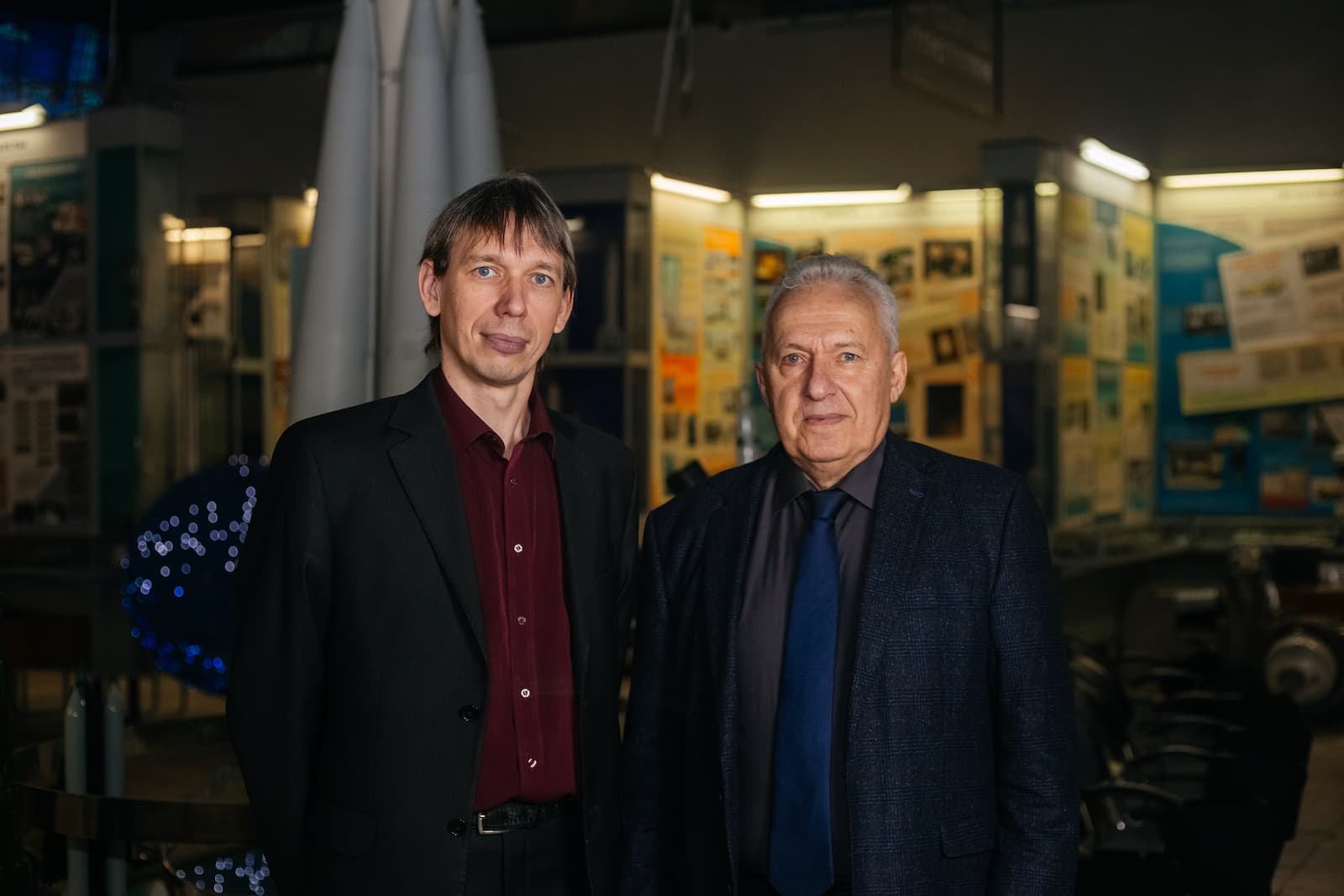
Titled “Modeling Prospective Space Transport Missions Using Tether Systems, Jet Propulsion, and Electrostatic Interaction,” the project is led by Vladimir Aslanov, Professor at the Department of Theoretical Mechanics.
“Our project focuses on refining and developing new low-cost space mission architectures and cargo transportation technologies between Earth orbit and other planets or moons,” explained Alexander Ledkov, Associate Professor at the same department and co-investigator on the project.
“We are particularly exploring the use of tether-based systems and contactless electrostatic interaction to solve orbital transport challenges, as well as designing and validating novel mission trajectories. Sustainability in space operations and economic efficiency are central guiding principles of our work.”
Supported by the RSF grant, the research team aims to address challenges with implications not only for lunar and Martian moon exploration but also for the broader advancement of the aerospace industry:
· analyzing the dynamics and developing control methods for space tether systems operating in the gravitational fields of a planet and its natural satellite during cargo-transfer operations;
· designing transfer trajectories that combine impulsive maneuvers with tether-assisted systems to deliver payloads from the surface of a planetary moon to the planet itself;
· investigating the potential of contactless electrostatic forces for proximity operations and docking phases in missions targeting natural satellites.
The research team includes, alongside Vladimir Aslanov and Alexander Ledkov, Vadim Yudintsev, also an Associate Professor at the Department of Theoretical Mechanics. Young researchers are playing a vital role as well: Ruslan Pikalov, Senior Lecturer; Tatiana Ledkova, Assistant at the Department of Software Systems; and students and postgraduates Anastasia Romanenko, Darya Neryadovskaya, and Darya Sizova.
“Involving students in real scientific research is a cornerstone of our department’s approach to nurturing the next generation of scientists,” emphasized Vladimir Aslanov.
